
Defining the standard for avalanche education
for:
American Avalanche Association
non-profit governance & education
2025 | NORTH AMERICA

Value Summary:
Turning institutional knowledge into a usable system that aligned providers, clarified authority, and strengthened education nationwide.
The problem
The American Avalanche Association (A3) is the governing body for avalanche education in North America. Its role is not to teach individual classes, but to set and steward the standards that ensure avalanche education is consistent, credible, and effective across hundreds of providers and tens of thousands of students each year. That role had become harder to execute.
Education is A3’s most important function, but the way it was communicated and operationalized had grown fragmented. Providers understood their own programs well, but interpreted their role within the broader A3 system differently. Expectations lived in conversations and legacy documents instead of shared tools. Staff carried deep institutional knowledge, but lacked the infrastructure to apply it consistently across audiences.
The challenge wasn’t confusion about values, it was the gap between knowing what A3 stood for and having the systems to make that standard real at scale.
If nothing changed, education would continue, but the burden would remain: staff would stay reactive; providers would rely on precedent and intuition; students would receive strong but uneven experiences. A3 would spend energy explaining itself instead of fully operating as the authority it already was.




The decision
A3 chose to lead with education as the backbone of the organization, not just one program among many.
This decision clarified how authority should function in a partnership-based system. Rather than relying on implied understanding, A3 committed to articulating its point of view clearly and supporting it with shared language, structure, and tools. Education became the primary expression of A3’s values, standards, and credibility.
The shift was not toward control, but toward clarity.
The Work
We rebuilt how A3 operationalizes and communicates education.
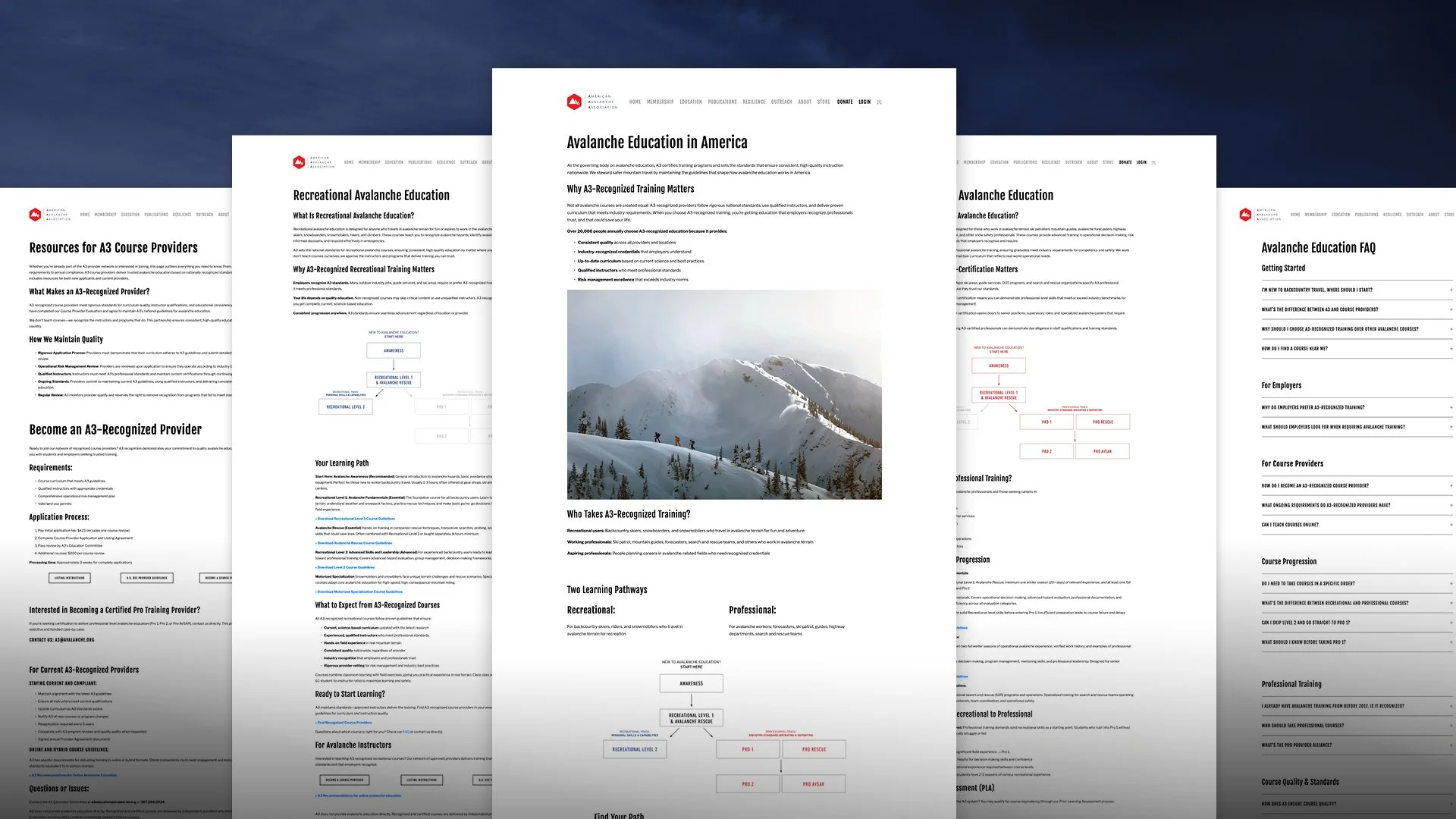
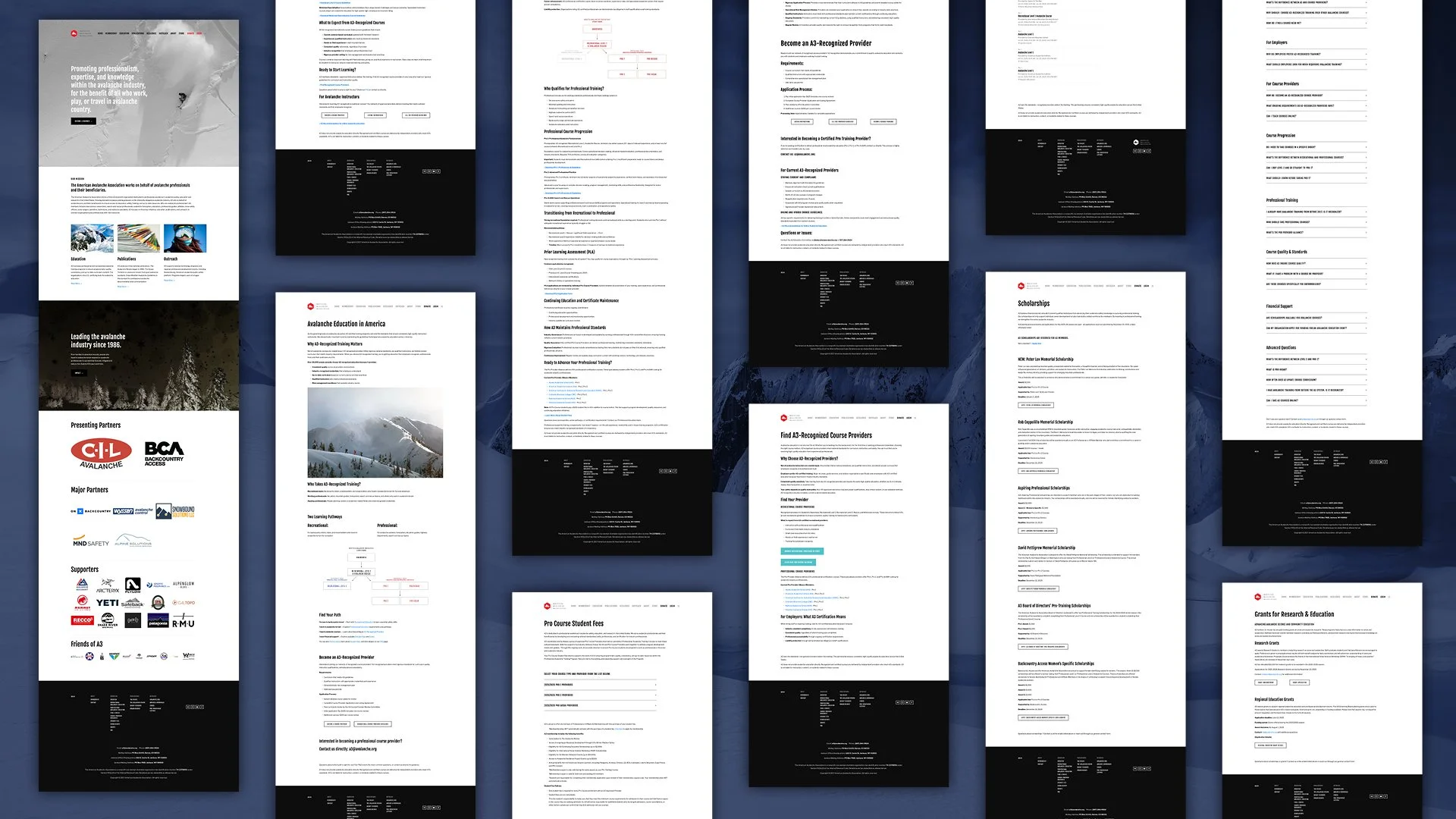
First, we rewrote the education section of the A3 website from the ground up, creating a clear, structured narrative across ten new pages. The goal was coherence and usability. Each page clarified how avalanche education works, what A3 governs, and why consistency matters.
Next, we designed visual journey tools that allowed students to understand their progression through avalanche education. These maps made complexity navigable, showing how courses connect and how different goals shape different paths.
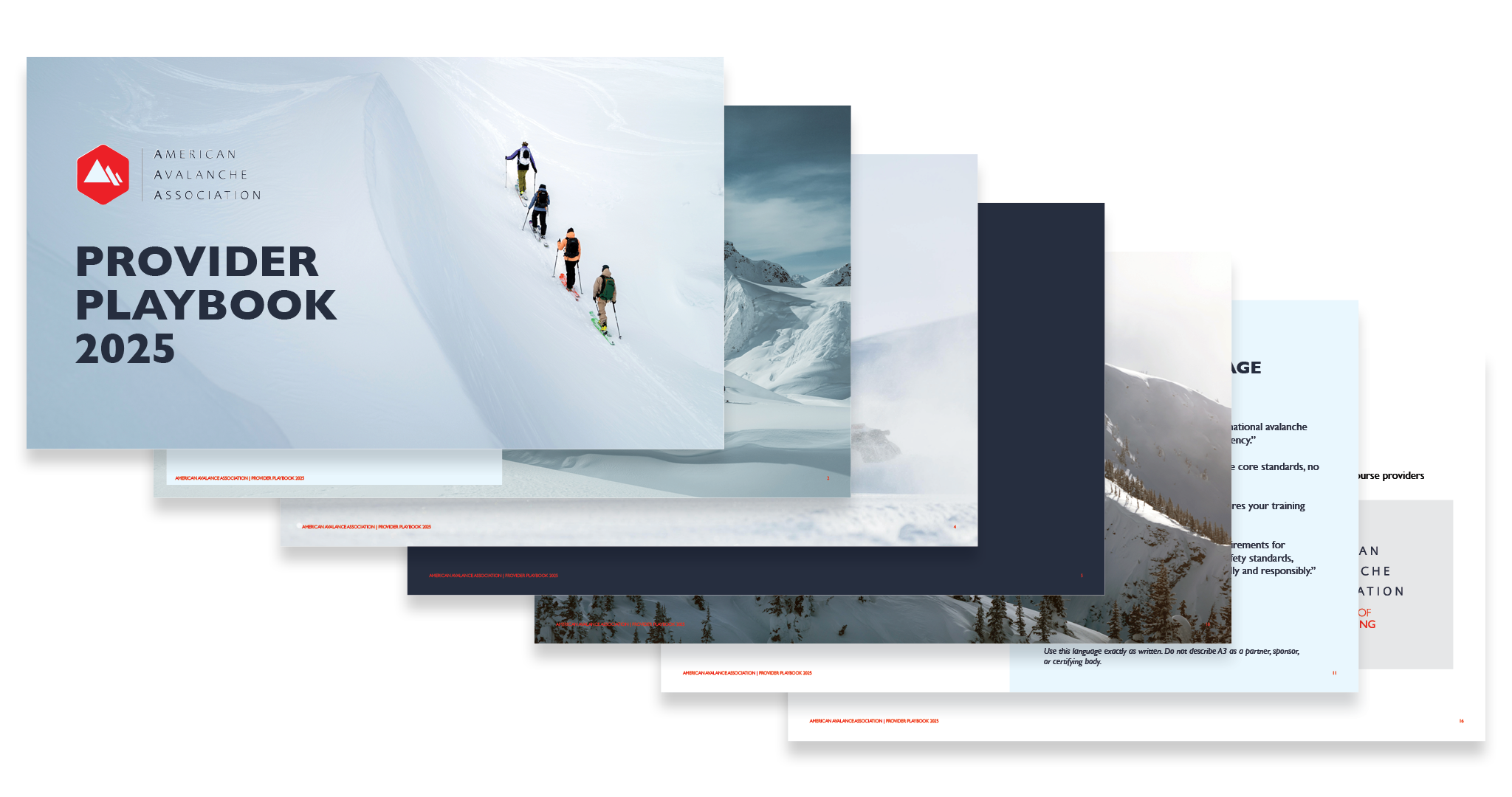
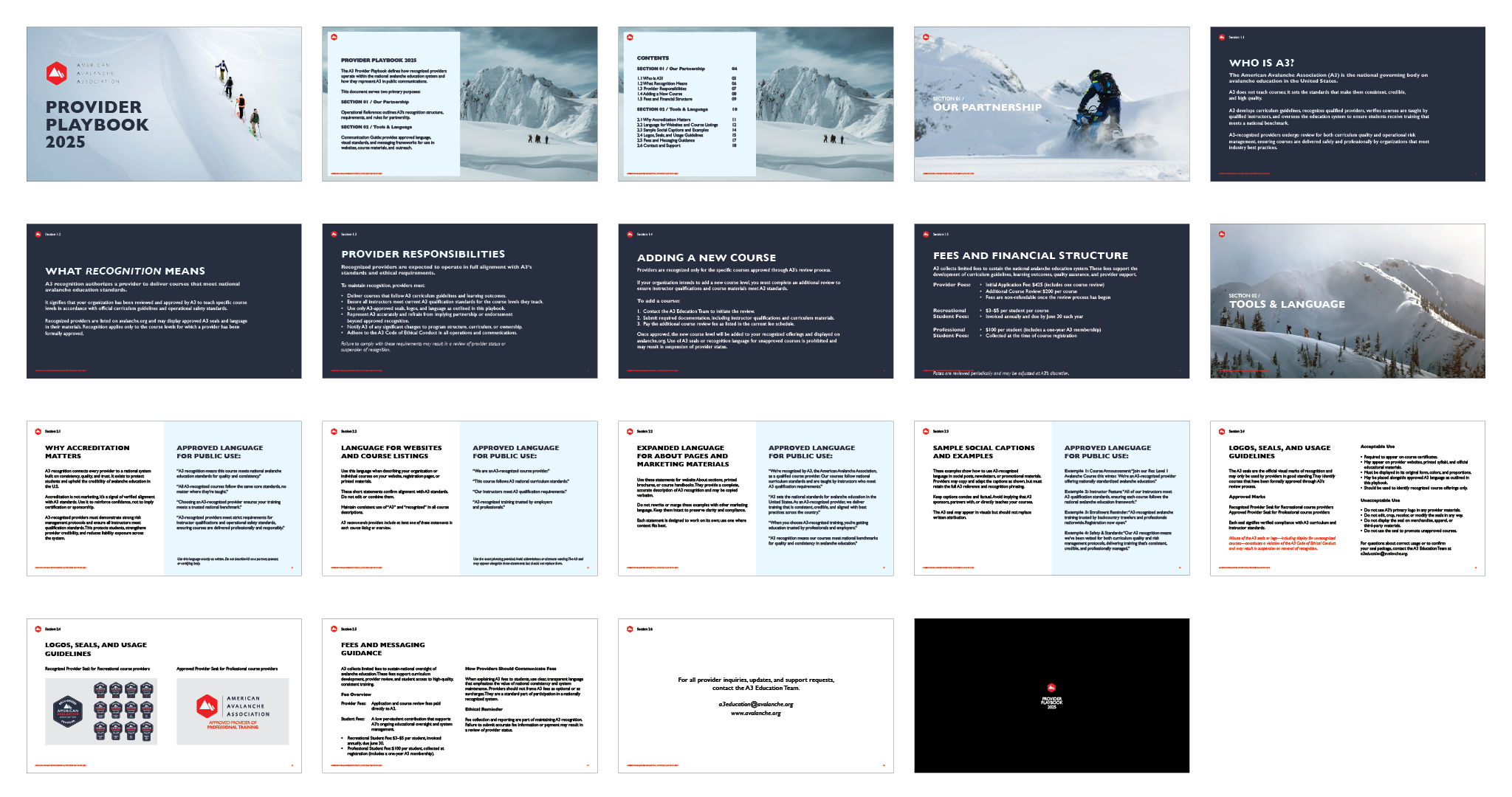
Finally, we created the first A3 Provider Playbook.
The playbook defined how recognized providers operate within the national avalanche education system and how they represent A3 publicly. It served as both an operational reference and a communication guide, outlining partnership expectations, standards, approved language, and visual direction. It gave providers the resources they needed to deliver A3-recognized excellence directly to their students.
Together, the website and playbook transformed institutional knowledge into shared infrastructure.
What changed
Internally, A3 gained a single point of view and a usable system to support it. Leadership had clearer priorities. Staff had tools instead of workarounds.
Providers gained confidence and alignment. Instead of interpreting expectations, they could apply them. Communication became consistent without sacrificing independence.
Students encountered a clearer standard. Regardless of provider or location, the value of A3-recognized education became easier to understand and trust.
Why it matters
This work mattered because education systems only work when standards are shared and applied consistently.
By turning belief into structure, A3 strengthened its ability to govern, support providers, and steward safer mountain travel. The result was not just better communication, but a more durable education ecosystem built to scale.
CSR Lab helped A3 articulate its point of view and give it form.