

Grounding a new brand in consumer truth
for:
Venom
SPECIALTY OUTDOOR APPAREL
2025 | NORTH AMERICA & Europe
Value Summary:
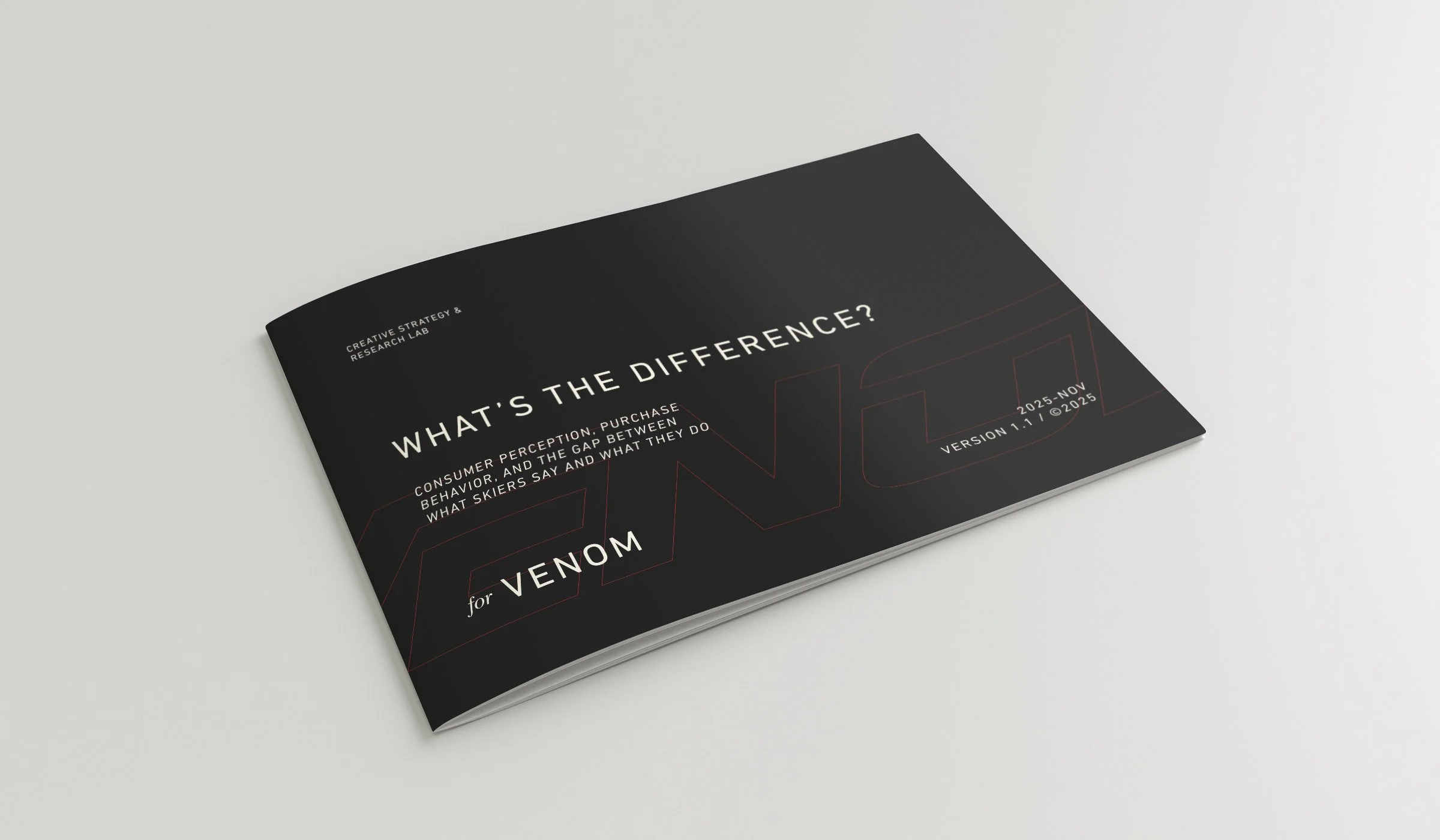
Audience research that exposed the gap between what consumers say they value and what actually drives their purchase.
THE PROBLEM
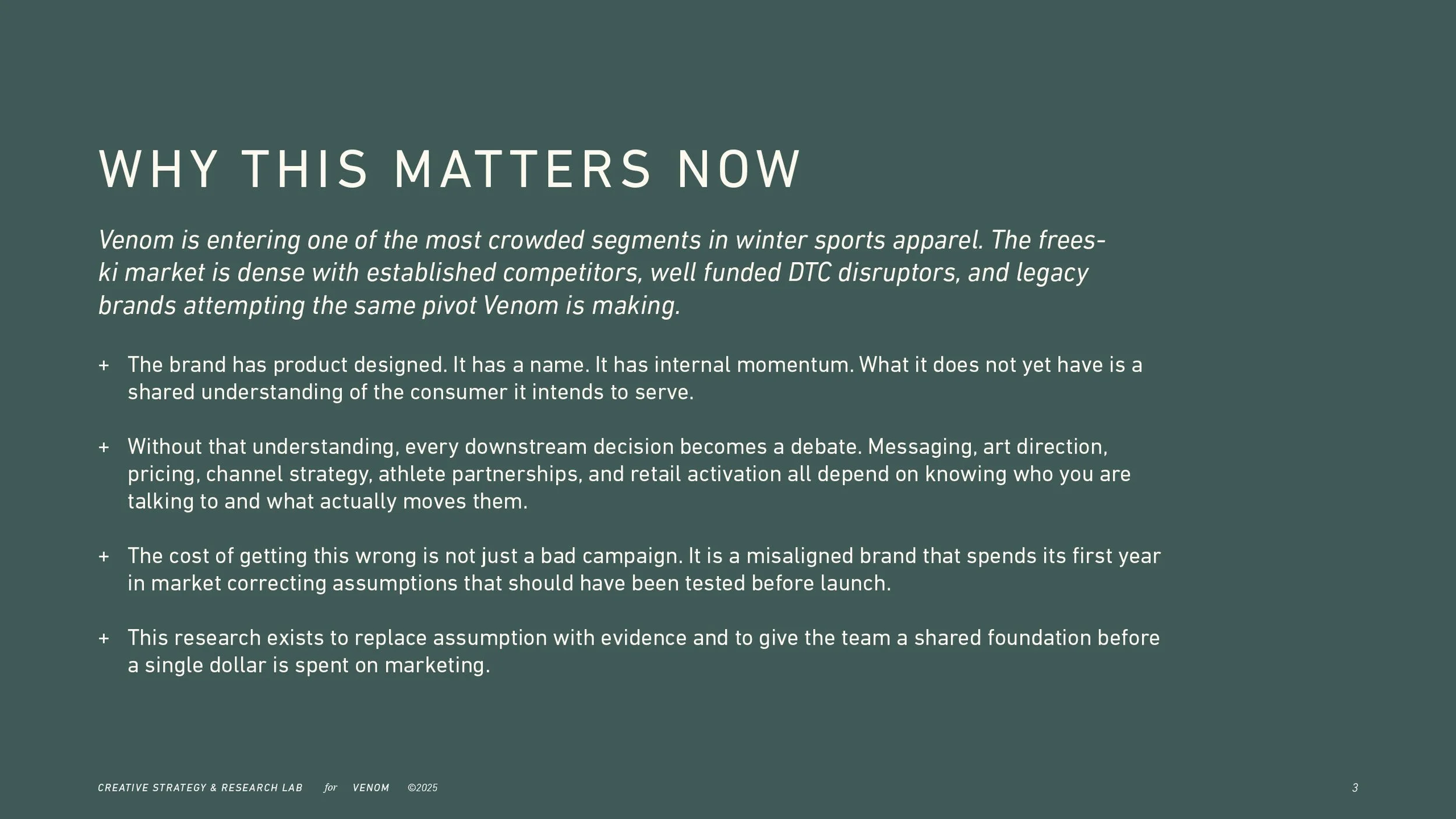
A new freeski apparel brand had product designed, a name chosen, and internal momentum building. What it did not have was a shared understanding of who it was for.
Venom was born from Spyder's heritage IP, designed to separate the parent brand's classic alpine identity from a younger, more culturally driven consumer. The target was the freeski audience: style forward, trend-aware, and skeptical of legacy brands trying to speak their language. The competitive set included Armada, 686, Airblaster, and most critically, Montec and Dope Snow, two DTC brands that had already captured the attention and wallets of this exact consumer.
But inside the building, there was no consensus. Every stakeholder had a different version of who this person was, what they cared about, and how to reach them. Opinions were built on anecdotes. The product direction was ahead of the positioning. And with no internal alignment, every decision about messaging, art direction, and go to market became a debate with no resolution.
The brand needed a foundation that wasn't someone's instinct. It needed proof.
THE DECISION
Rather than let the loudest opinion set the direction, the team chose to invest in research before marketing.
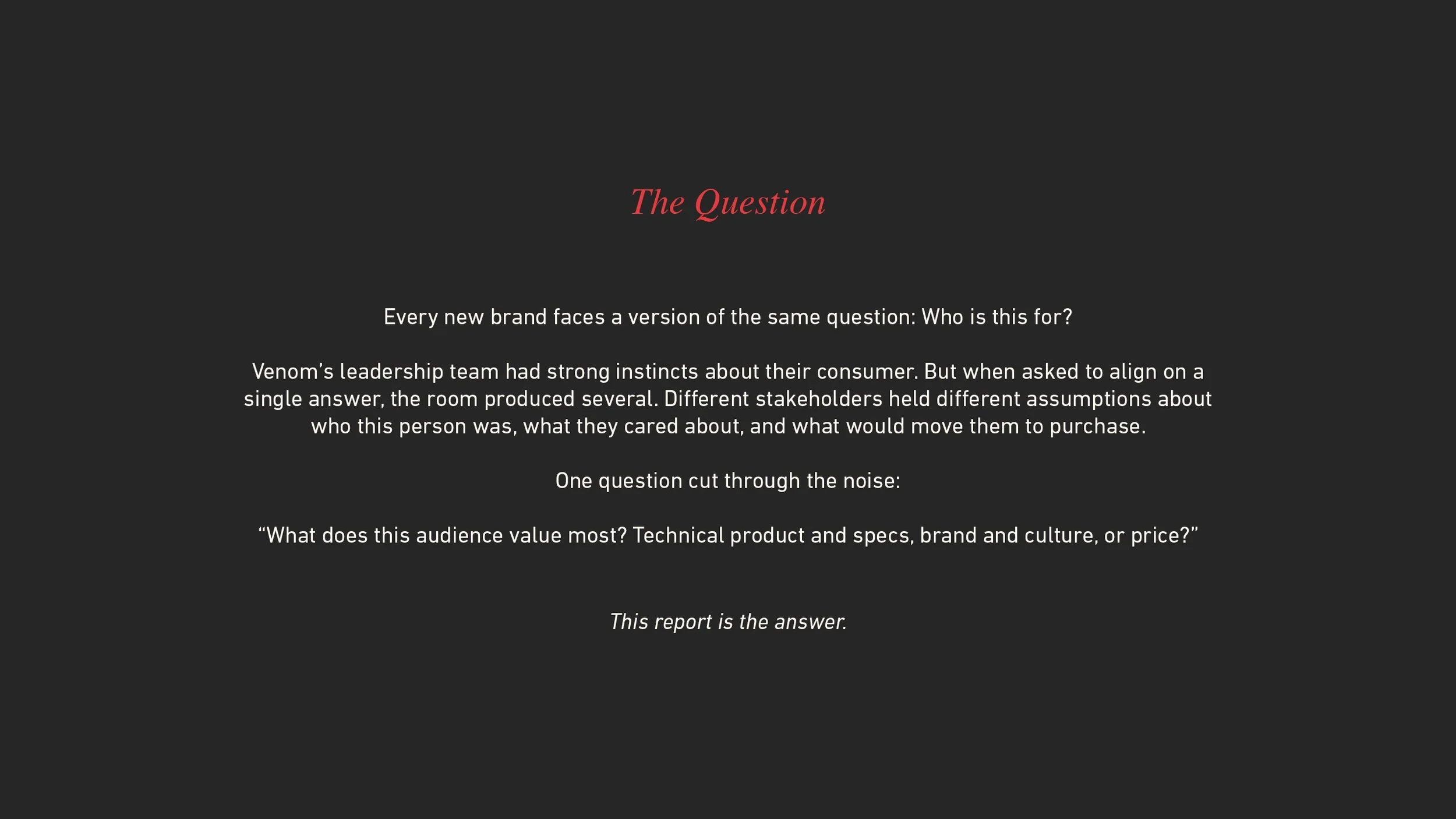
CSR Lab was brought in to run a focused research sprint: qualitative interviews, desk research, competitive analysis, and cultural scanning. The engagement was designed around one question the VP of Marketing posed directly: "What does this audience value most? Technical product and specs, brand and culture, or price?"
The bet was that real consumer insight would do what internal debate could not: give the team a shared language and a reason to agree.

THE WORK
CSR Lab designed and conducted 15 qualitative interviews alongside competitive brand research, social scraping, and cultural analysis across the freeski and adjacent outdoor markets.
The findings challenged the team's assumptions at every level.
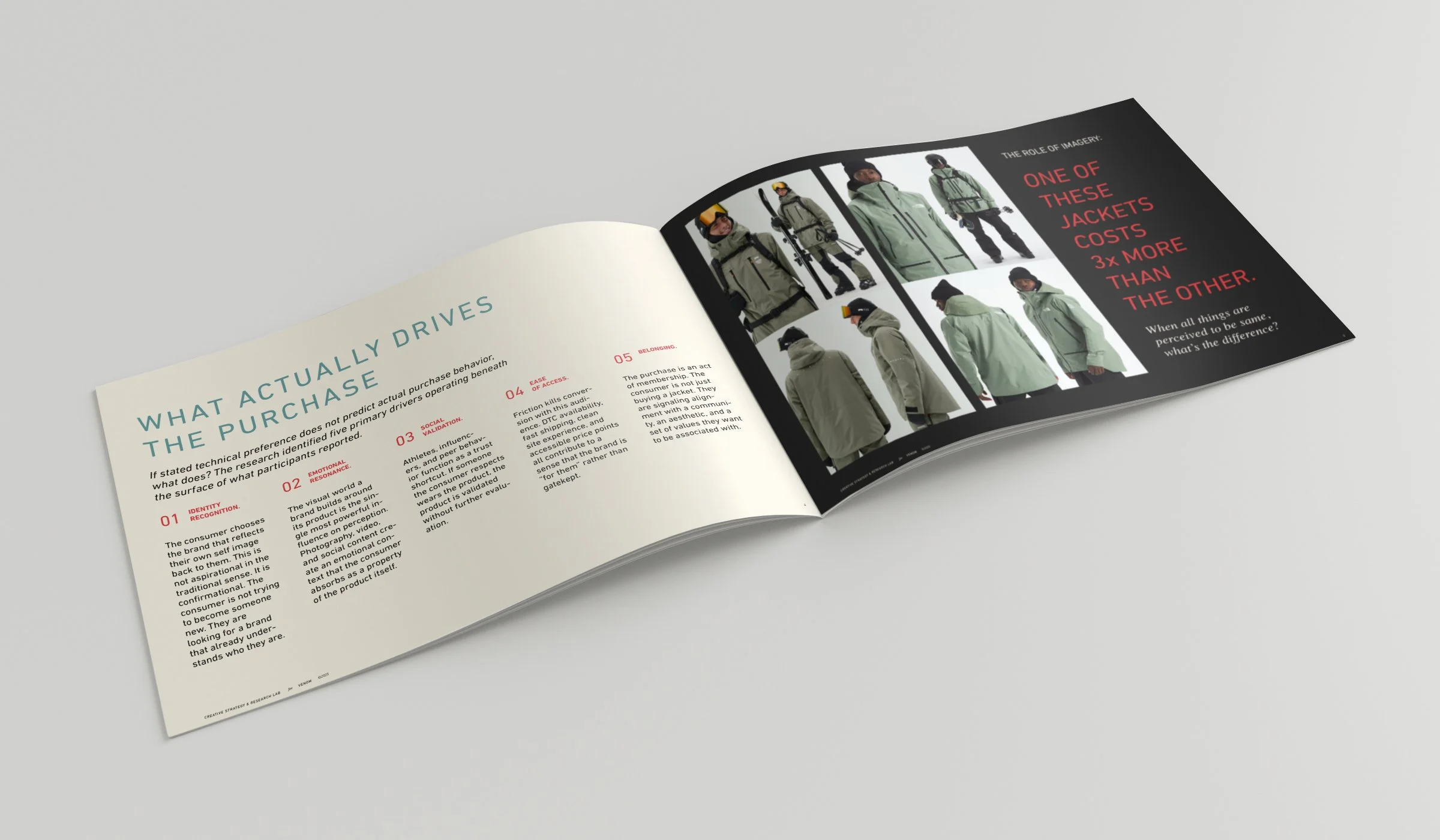
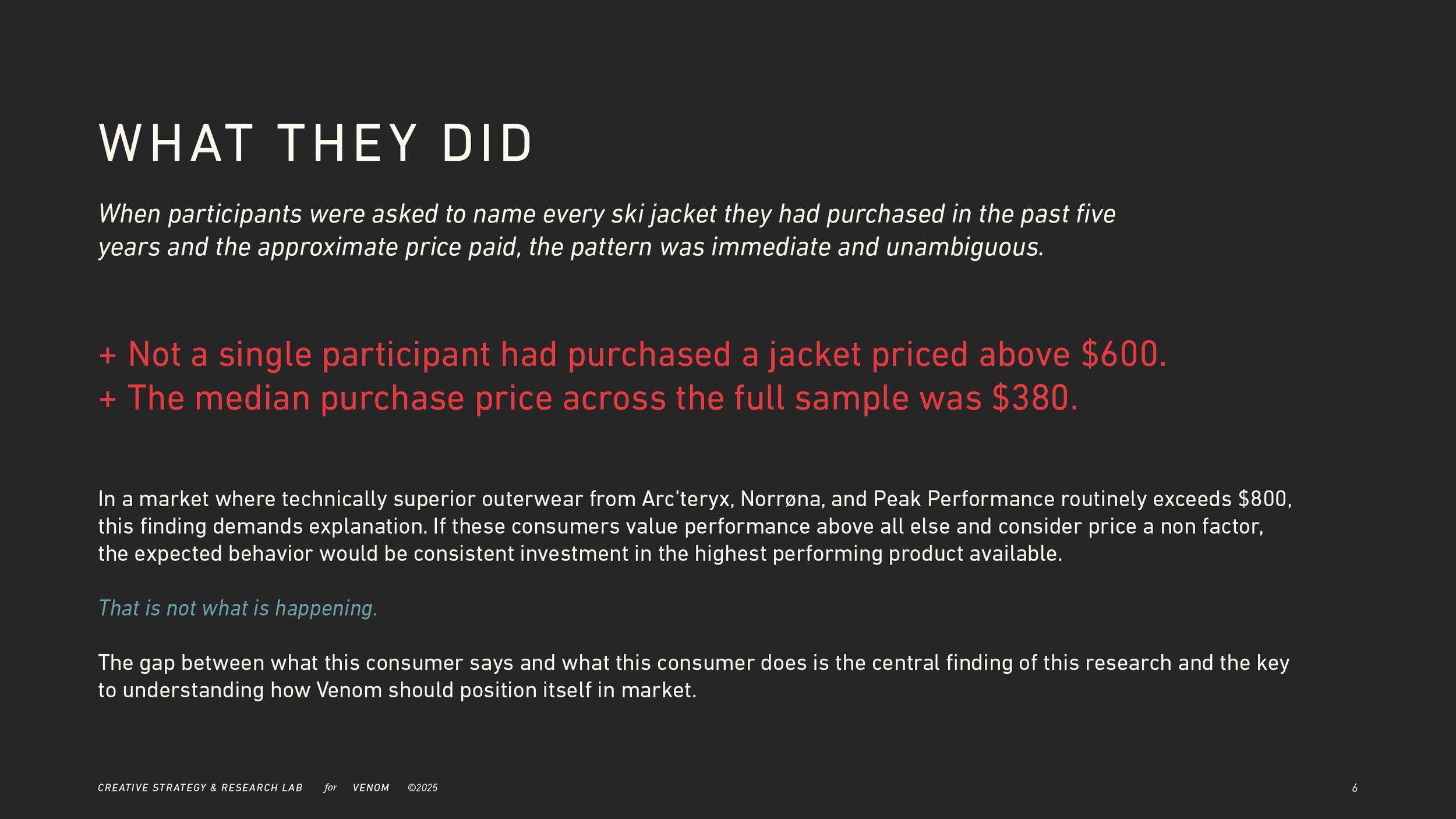
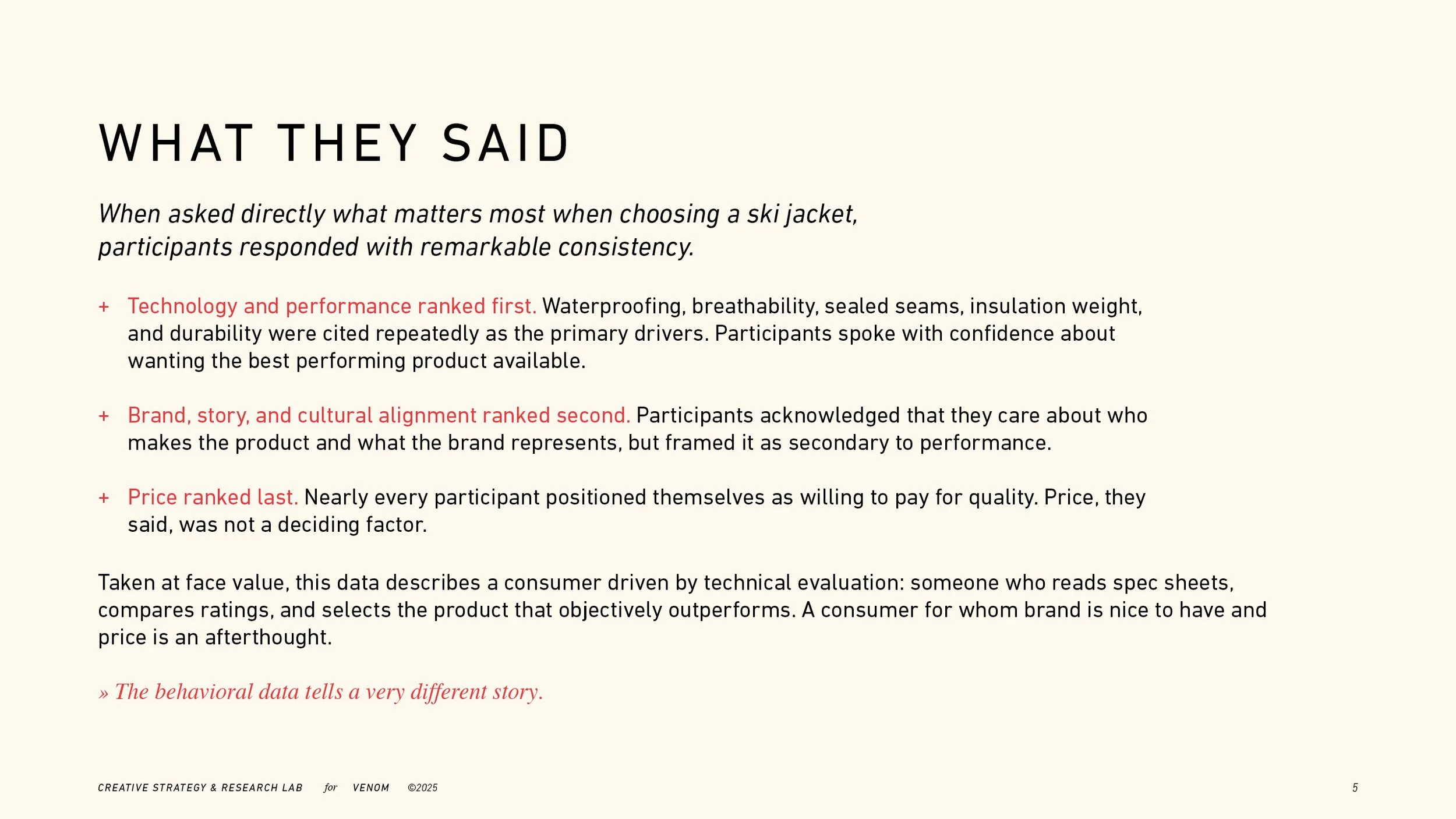
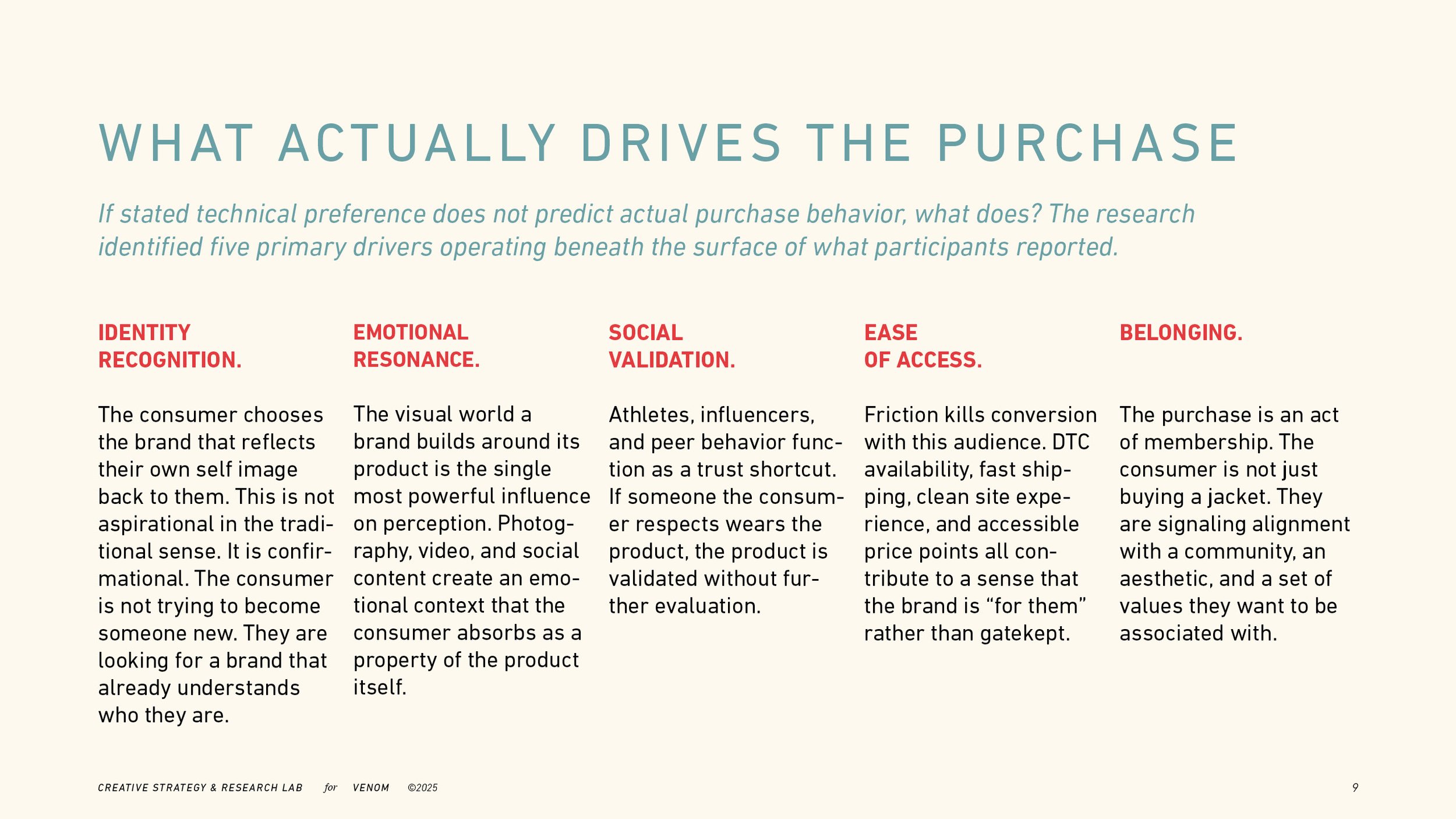
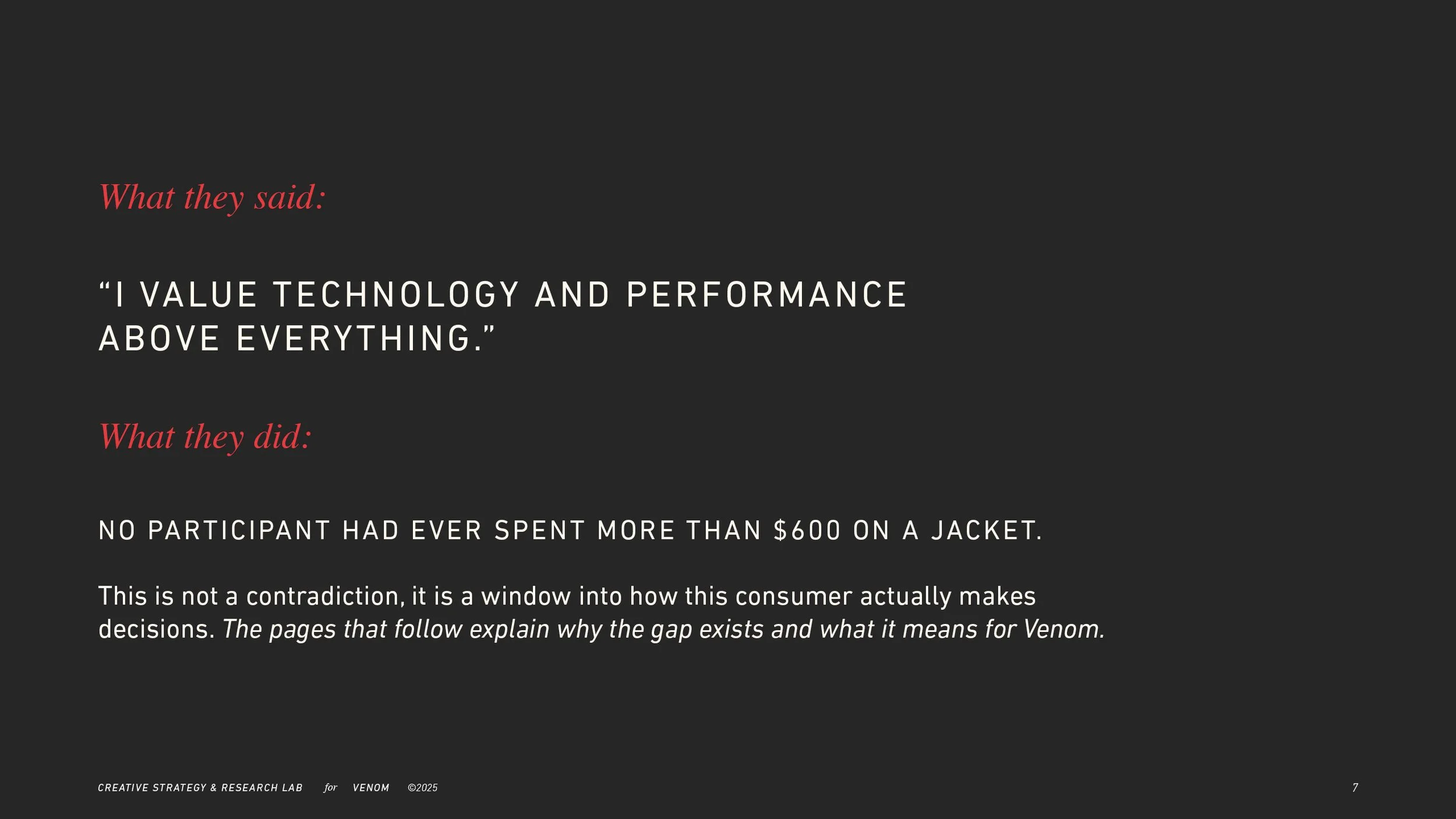
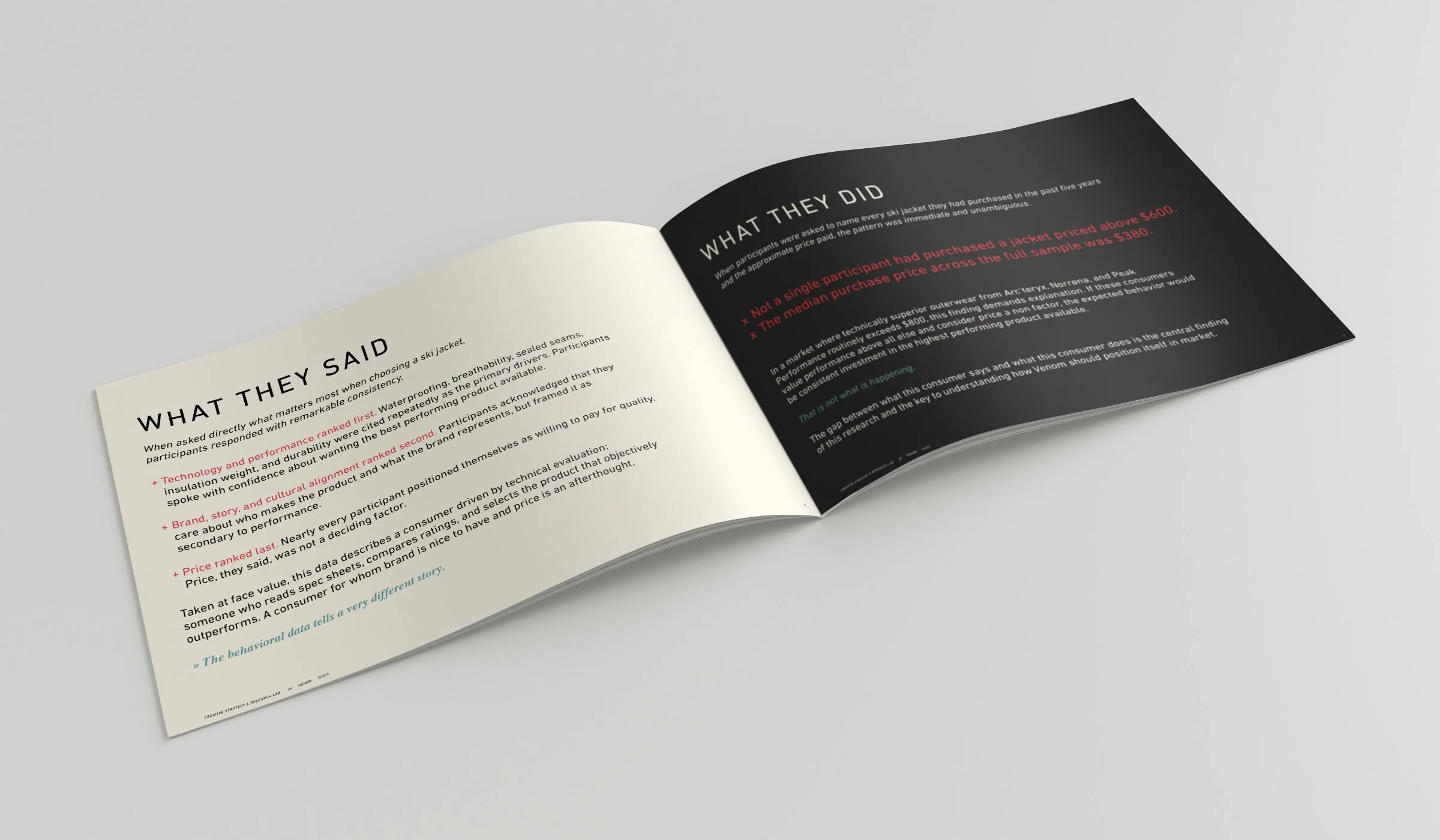
On the surface, participants ranked technology and performance as their highest priority, brand and story second, and price last. But the behavioral data told a different story. Not one participant had ever purchased a jacket for more than $600. In a market where technically superior outerwear runs $800 to $1,200, the question became obvious: if they value performance above all else, why aren't they buying the best?
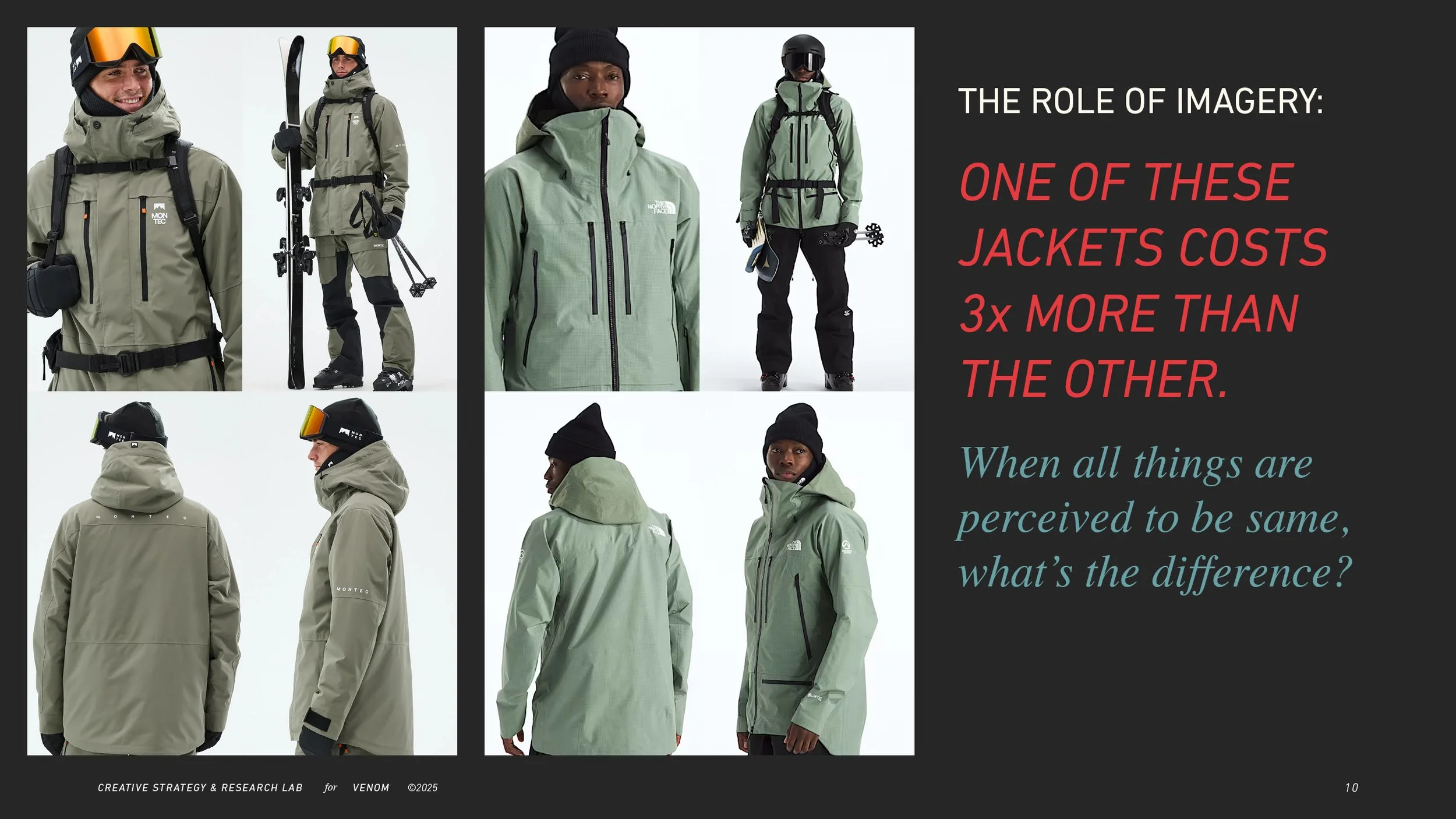
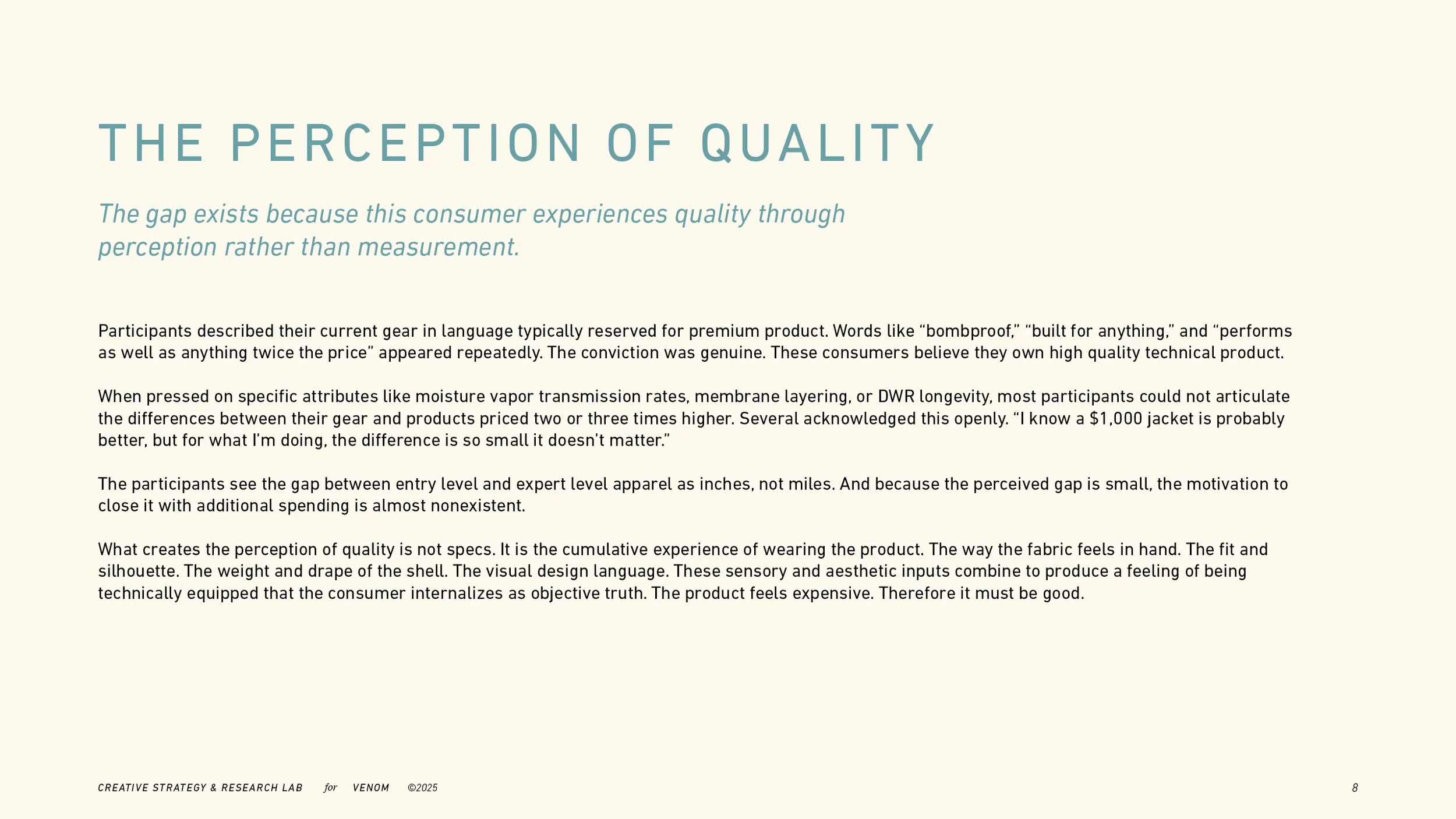
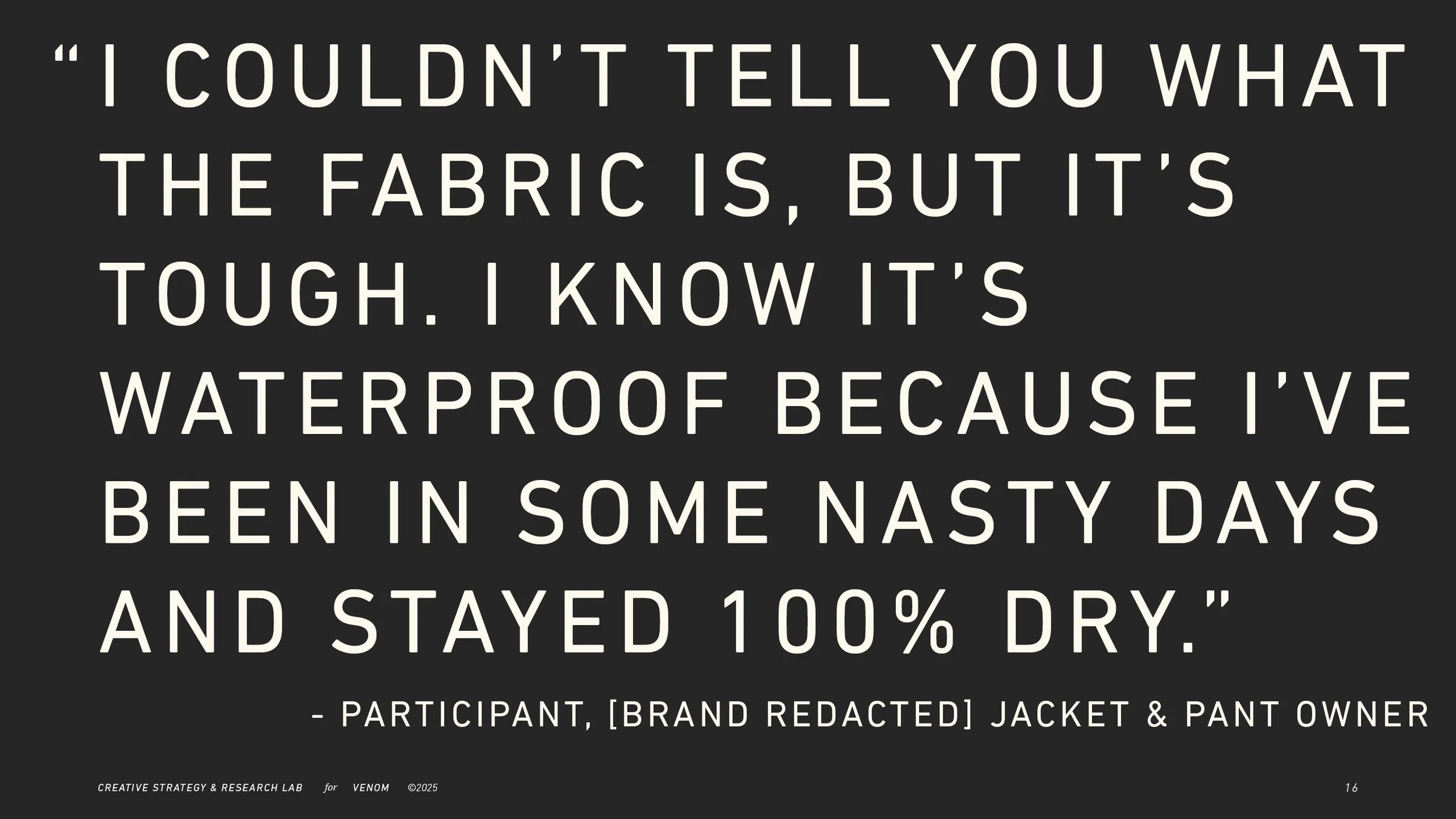
The answer reshaped the entire brand direction. These consumers see the difference between entry level and expert level apparel as inches, not miles. They are happy to wear gear priced at the entry level because it feels like expert level. The fabric, the fit, the overall feel of wearing the product creates a sense of being technically equipped, even when the actual specs don't justify the perception. Pair that with the validation of influencers and athletes wearing the same product, and the equation becomes simple: if it's easy to get and it makes me feel good, it must be quality.
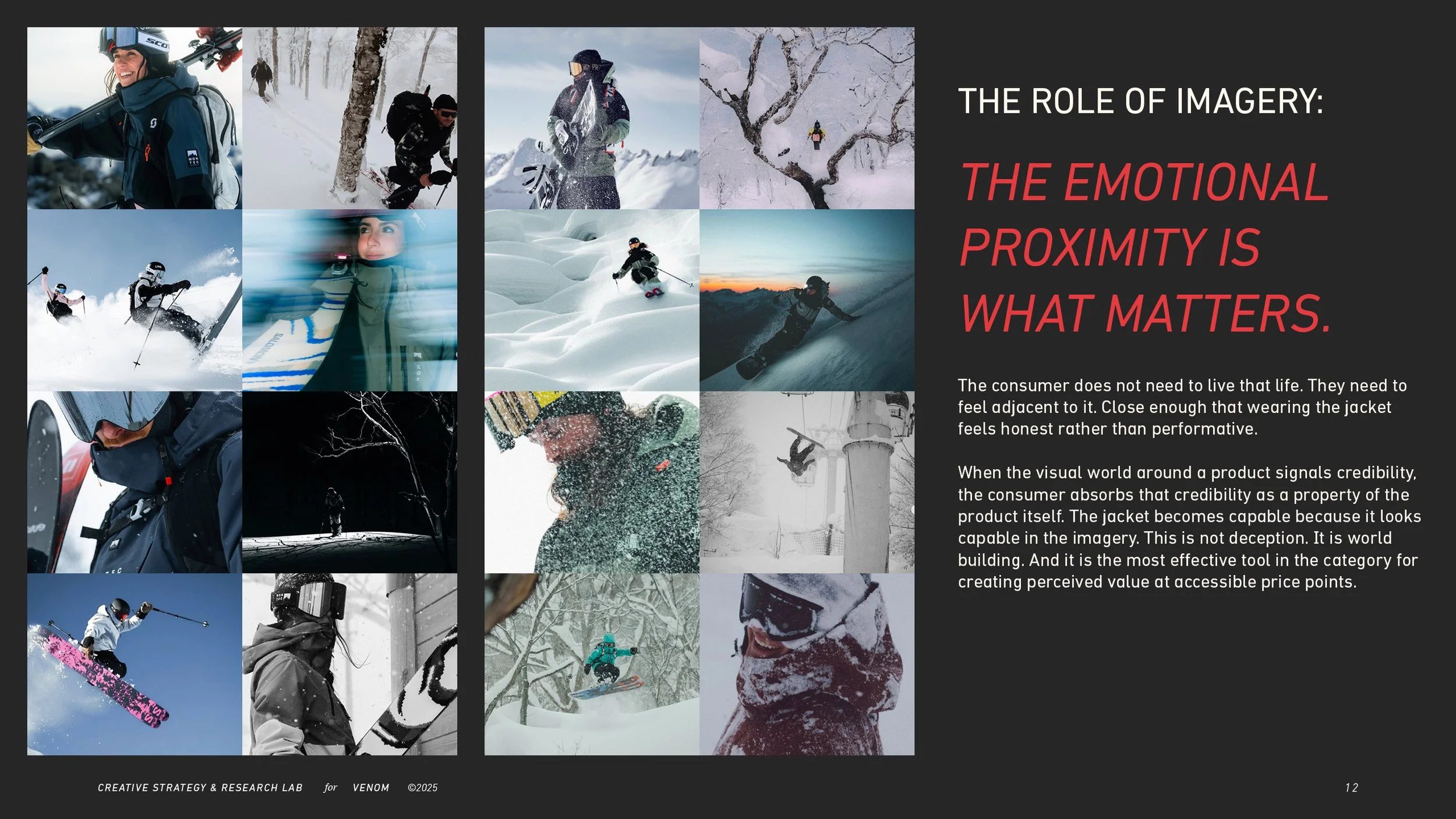
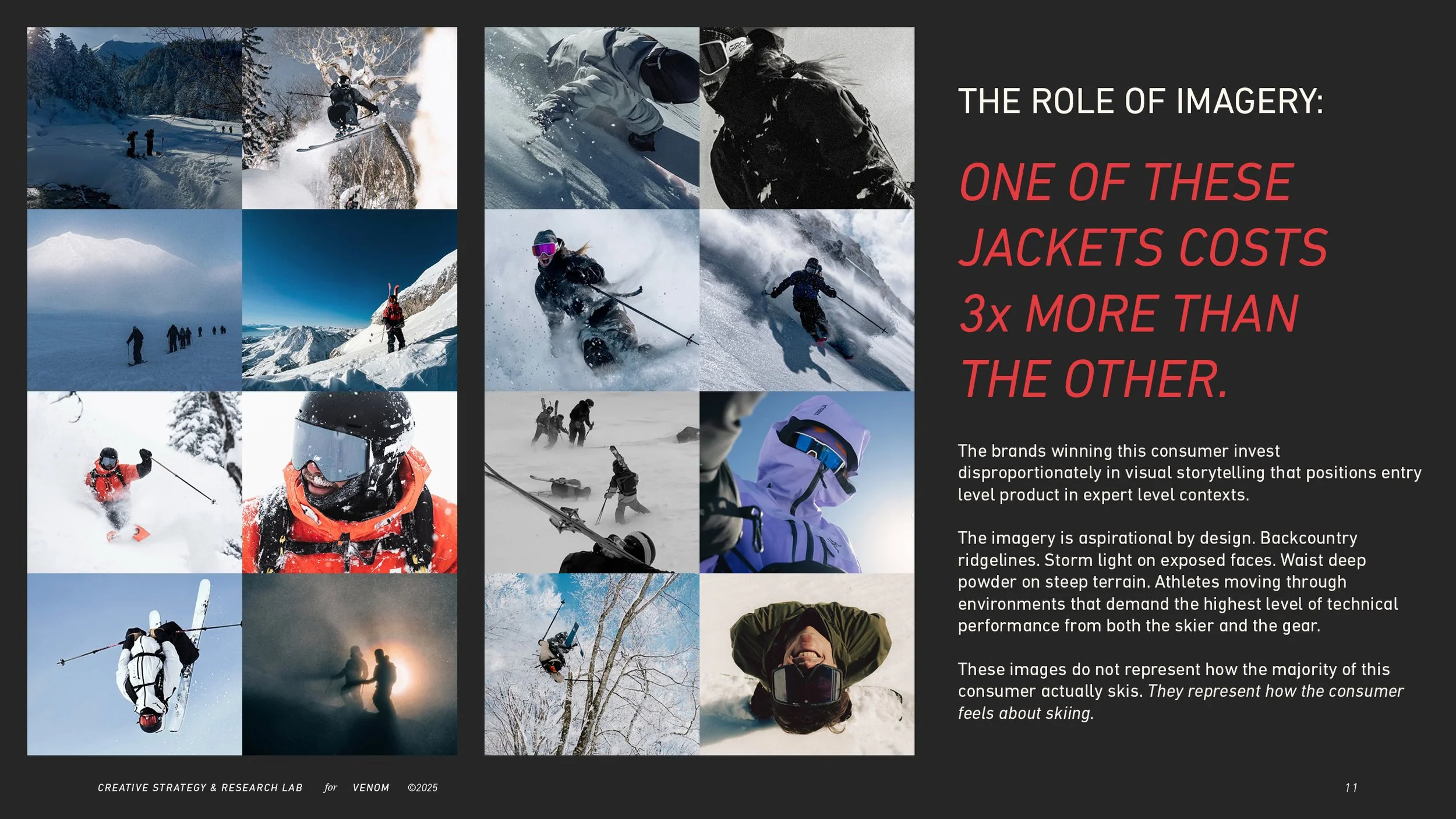
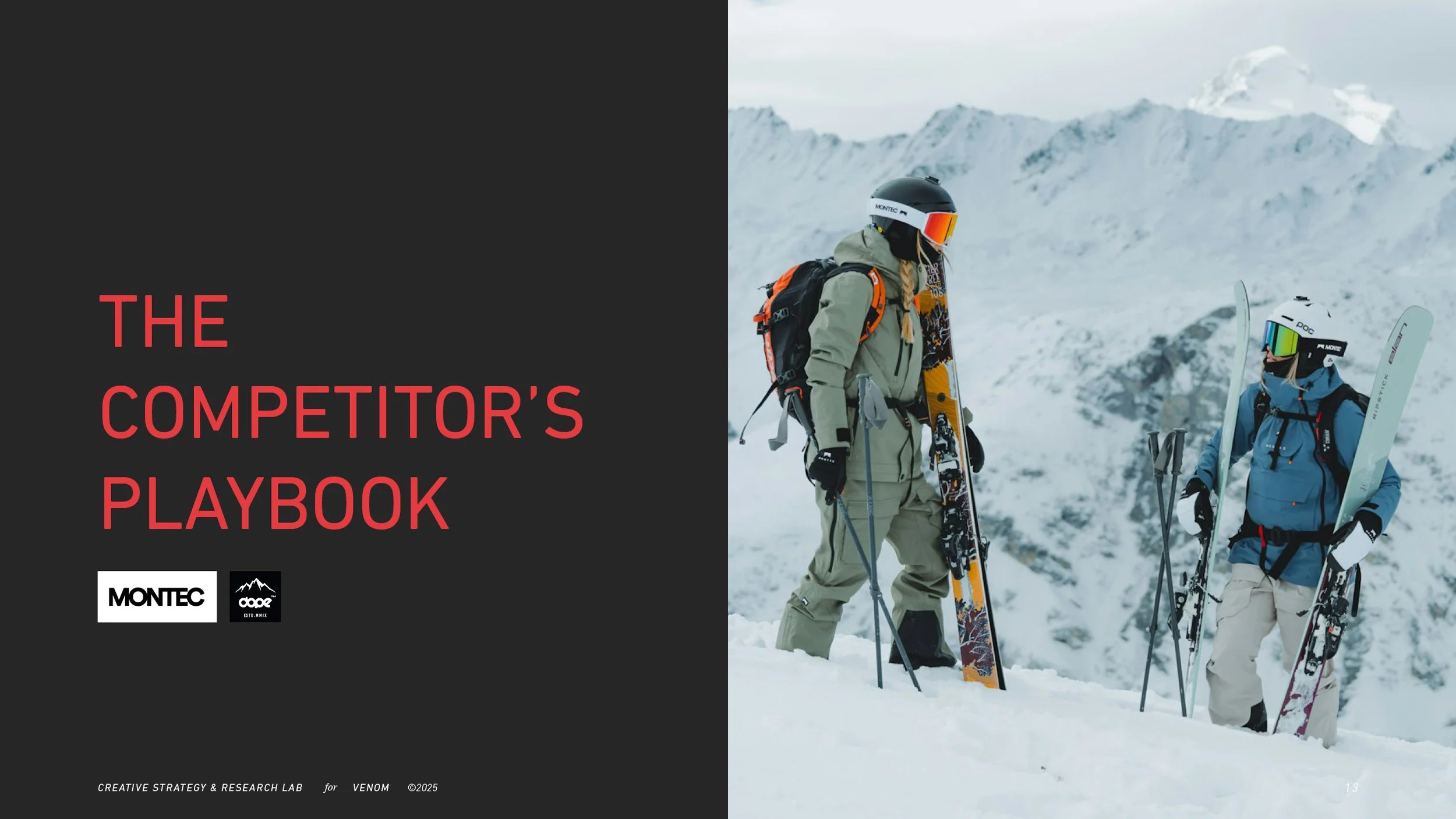
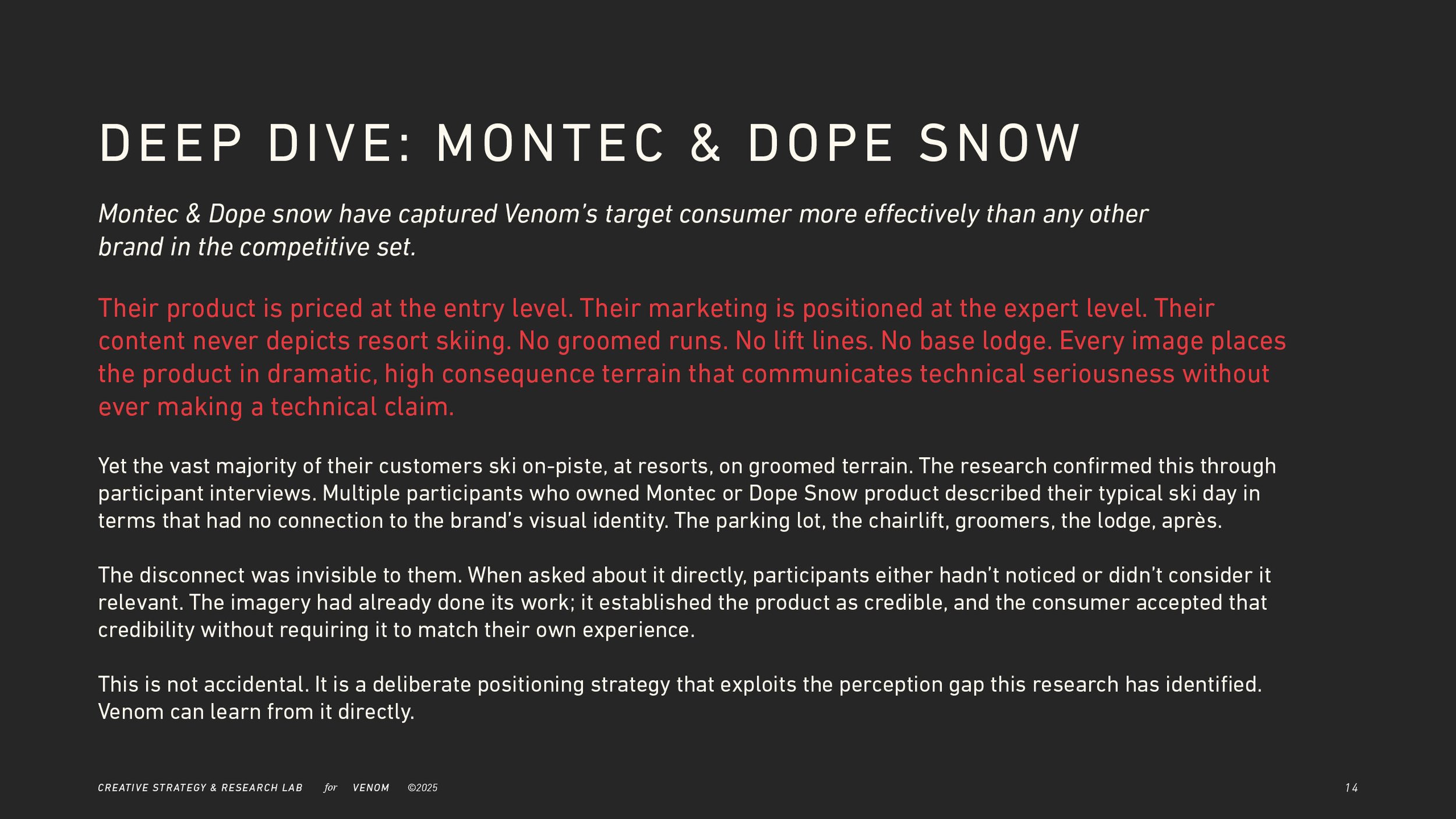
The competitive analysis confirmed the pattern. Montec and Dope Snow, the two brands most successfully capturing this consumer, never show their gear being used at a ski resort. Their imagery is expedition grade: harsh conditions, dramatic terrain, cinematic emotion. And yet, the vast majority of their customers ski on piste, at resorts, on groomed runs. The consumer sees themselves as emotionally in the ballpark with backcountry and expedition skiers. The expedition might just be from the parking lot to the chairlift and back to the bar. But the feeling is real, and the feeling is what sells.
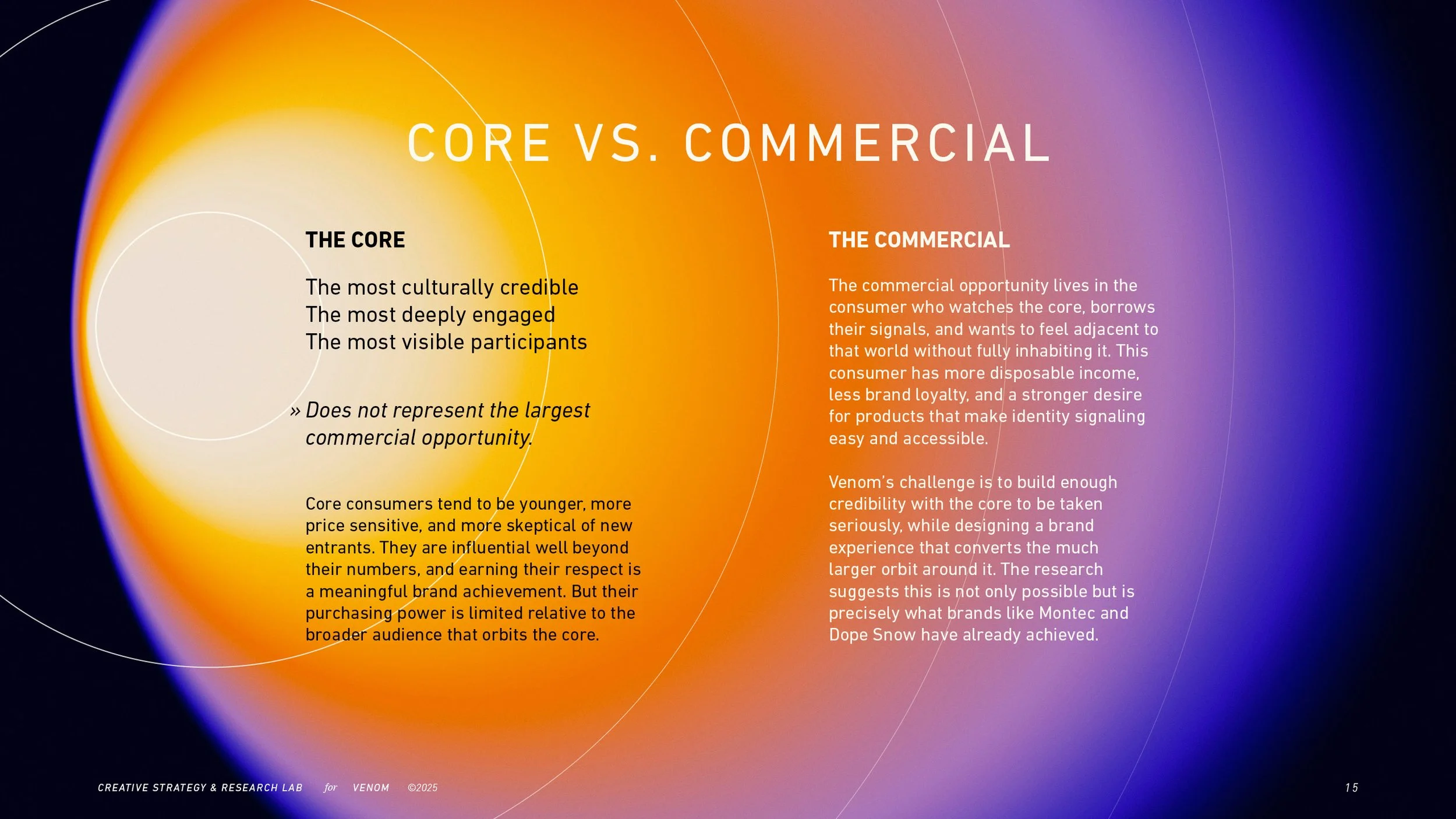
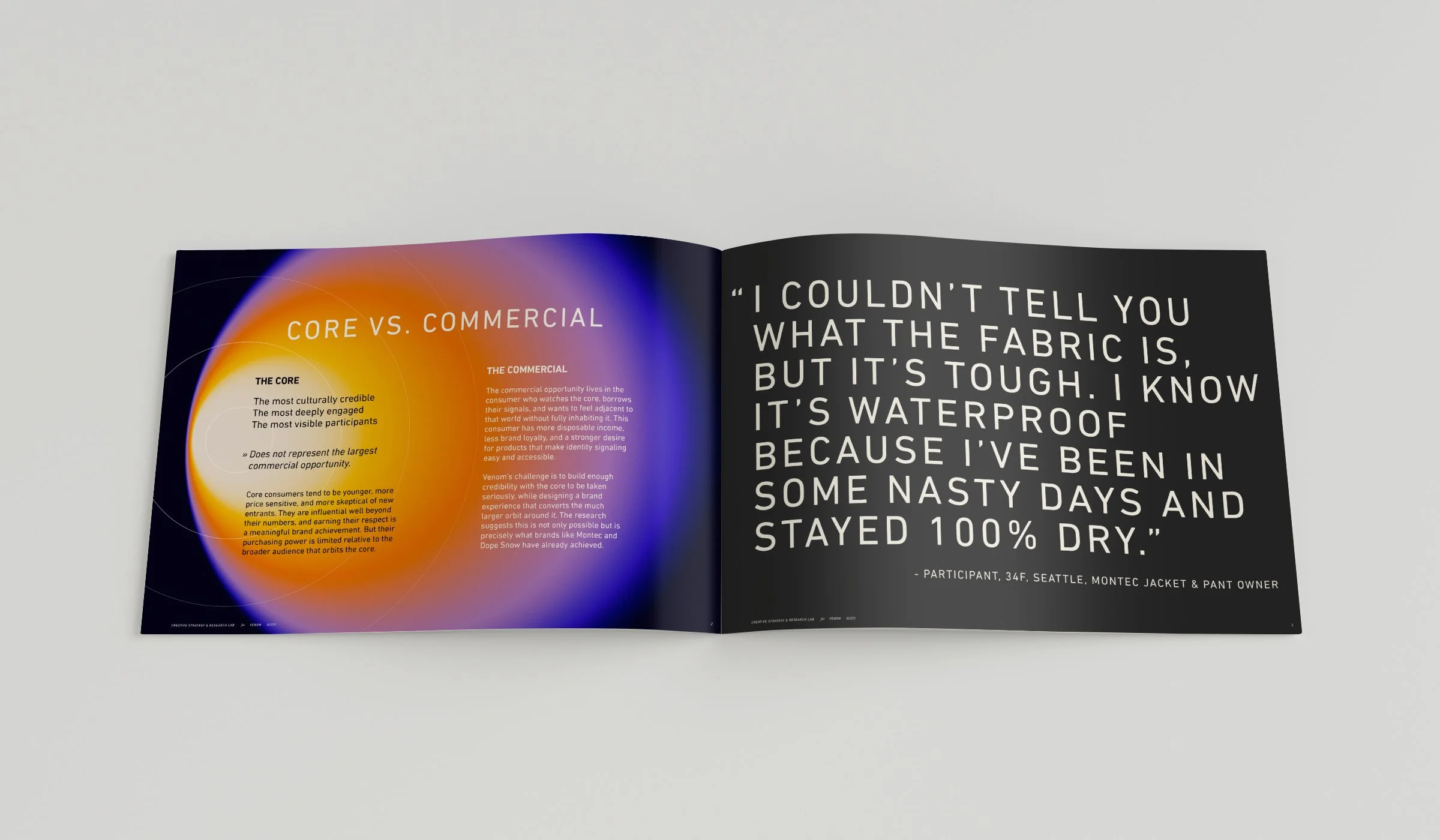
The deeper insight was about market opportunity itself. In the ski industry, the core demographic, the most respected and culturally credible consumer, does not have the most disposable income. Earning the respect of the core market is a meaningful cultural achievement, but it is not the same as capturing the largest market opportunity. The research helped the team see clearly where credibility and commerce overlapped, and where they diverged.
WHAT CHANGED
The research gave the Venom team something it had not had before: a shared framework for decision making.
Internal disagreements about tone, audience, and competitive positioning gave way to a unified direction grounded in what the consumer actually does rather than what they say. The brand's go to market approach shifted from leading with technical specifications to leading with emotional credibility, cultural belonging, and the perception of quality.
The team adopted the insight that this consumer buys on feeling, not on spec sheets, and began building a visual and narrative identity designed to meet that behavior. Aspirational imagery.; community driven content; a brand voice that speaks to identity, not just performance.
Venom is slated to launch in Fall 2026 with a positioning strategy built directly from the research.
WHY IT MATTERS
This is what it looks like when a brand chooses to listen before it leads.
Venom had the product and it had the name. What it lacked was alignment, and alignment doesn't come from the boardroom. It comes from understanding who you're talking to and what actually moves them.
The research resolved a fundamental disagreement about what this brand was for. And it did so by revealing a truth that applies well beyond freeski apparel: what consumers say they value and what actually drives their purchase are rarely the same thing.